
What Is Anesthesia-Free Dog Teeth Cleaning?
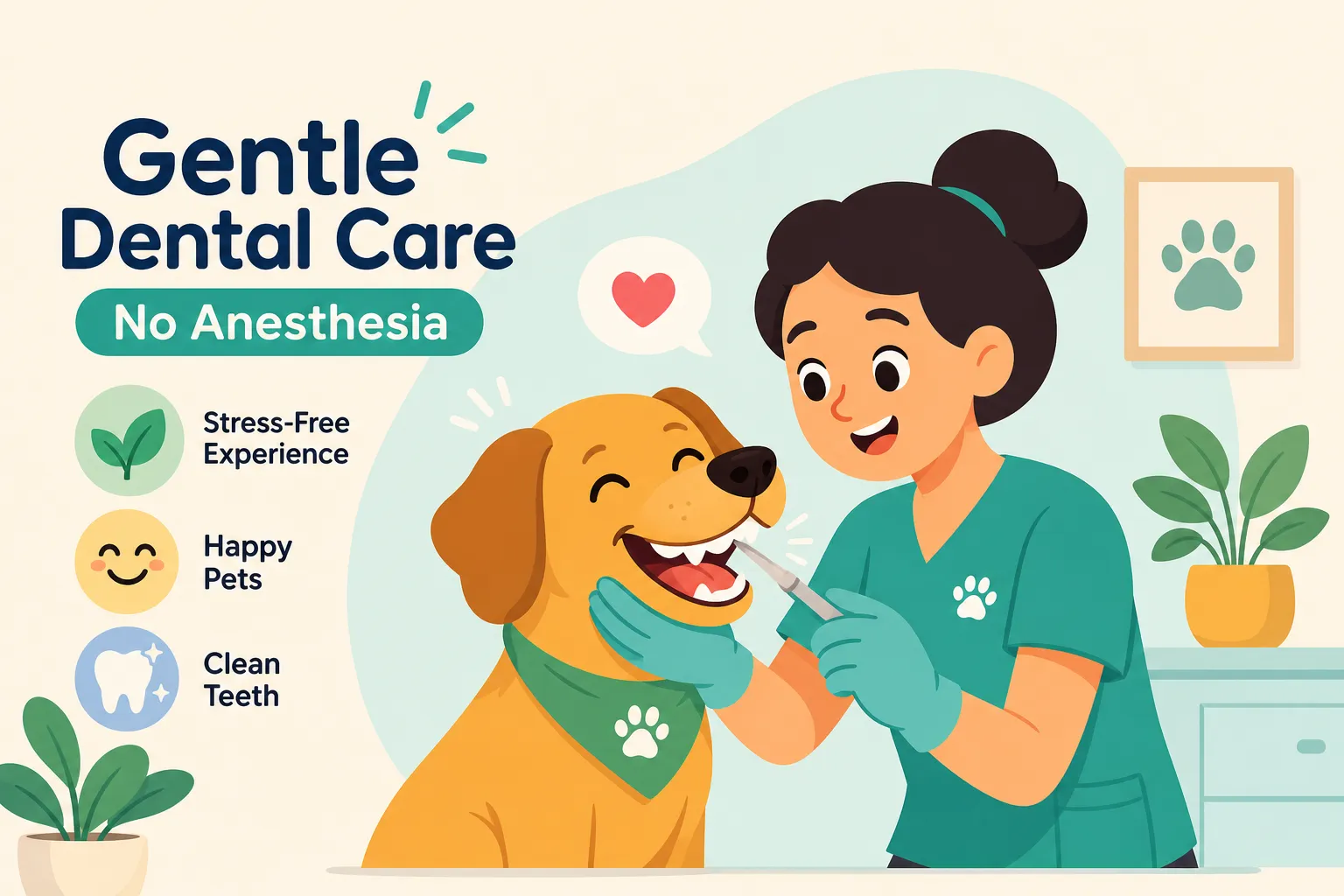
Anesthesia-free dog teeth cleaning removes visible plaque and tartar from accessible outer surfaces of your dog's teeth above the gumline while they remain fully awake, with no sedation. Its intended benefit is cosmetic: it does not evaluate or treat periodontal disease. It does not clean below the gumline, take dental X-rays, or diagnose and treat periodontal disease.
At Coco's Mobile Pet Grooming, dog owners frequently ask how this service works and where its limits lie. Our anesthesia-free cosmetic teeth cleaning is separately priced and can be booked either as an independent appointment or alongside a full mobile grooming visit at your home in Southwest Ranches, Pembroke Pines, Weston, Davie, Miramar, Sunrise, Plantation, Cooper City, and nearby communities in our service area. This guide walks through what happens during a session, how it compares to veterinary dental care, what veterinary organizations say about it, and what to share with us—or discuss with your veterinarian—before booking.
On this page
Key Takeaways
- Cosmetic surface care only: Our service uses an ultrasonic scaler on accessible tooth surfaces above the gumline, followed by polishing accessible crowns and using a pet-safe antiseptic wipe or rinse.
- Veterinary organizations oppose awake scaling: Leading veterinary groups—including the AAHA, AVDC, and WSAVA—oppose non-anesthetic dental cleanings on clinical and animal-welfare grounds, rather than merely opposing them as a replacement for veterinary care.
- Cooperation does not establish safety: A dog's tolerance determines whether handling can proceed, and our team adjusts or stops if a pet cannot tolerate the session—but calm behavior does not eliminate injury risks or rule out hidden dental disease.
- Veterinary exams remain essential: Only a veterinarian can evaluate oral health below the gumline, and daily home brushing with pet-safe toothpaste remains important between veterinary visits.
What Actually Happens During an Anesthesia-Free Cleaning
Tools and Surface-Level Steps
During a cosmetic teeth cleaning session at Coco's, our team uses an ultrasonic scaler to remove visible plaque and tartar from accessible tooth surfaces above the gumline, polishes the accessible crowns, and finishes with a pet-safe antiseptic wipe or rinse.
Understanding what is not part of the session is equally important. There is no scaling below the gumline (subgingival scaling), no periodontal probing, and no dental radiography. Inner tooth surfaces and rear molars are also difficult to reach safely on an awake dog, so work is limited to accessible outer surfaces.
What the Experience Looks Like for Your Dog
Your dog remains fully conscious throughout the appointment, which means their tolerance governs whether the session can move forward. Our team watches your dog's body language closely and adjusts our approach or stops the work if your dog cannot tolerate it.
Even when a dog appears calm, working inside an awake dog's mouth involves real physical risk. A sudden movement while instruments are near the teeth or gums can injure oral tissues, as the American Veterinary Dental College (AVDC) warns. Calm behavior allows handling to proceed, but it does not eliminate those risks, guarantee comfort, or confirm that a dog's mouth is healthy.
How Cosmetic Cleaning Compares to a Veterinary Dental Procedure
Most periodontal disease develops beneath the gumline, out of sight and beyond the reach of awake surface tools.
When a pet is placed under general anesthesia at a veterinary clinic, a veterinarian and an appropriately trained veterinary team (working under veterinary supervision, as applicable) can carry out a comprehensive oral assessment and medical treatment. Veterinary dental care under general anesthesia includes full periodontal probing, dental radiographs (X-rays), scaling above and below the gumline, tooth polishing, airway protection via an endotracheal tube, continuous patient monitoring, and pain management. Additional periodontal treatment, such as root planing, is performed when clinically indicated.
The veterinary column summarizes recommended comprehensive care; treatment depends on examination findings and the agreed treatment plan.
| Aspect of Care | Coco's Anesthesia-Free Cosmetic Cleaning | Recommended Comprehensive Veterinary Dental Care Under General Anesthesia |
|---|---|---|
| Scaling of accessible surfaces above the gumline | Included | Included |
| Polishing of accessible tooth crowns | Included | Included |
| Subgingival scaling below the gumline | Not included | Included |
| Root planing | Not included | When clinically indicated |
| Periodontal probing | Not included | Included |
| Dental radiographs (X-rays) | Not included | Included |
| Airway protection (endotracheal tube) | Not included | Included |
| Anesthetic monitoring and pain management | Not included | Included |
| Diagnosis and treatment of periodontal disease | Not included | Assessment included; treatment based on findings and agreed plan |
What Major Veterinary Organizations Say
Leading veterinary authorities—including the American Animal Hospital Association (AAHA), the American Veterinary Dental College (AVDC), and the World Small Animal Veterinary Association (WSAVA)—oppose non-anesthetic dental cleanings more broadly than simply advising against using them as a substitute for veterinary treatment, citing clinical limitations and animal-welfare concerns.
In particular, WSAVA guidelines distinguish between a preliminary visual check on a conscious pet and a comprehensive oral evaluation performed under anesthesia. A core concern shared across these organizations is false reassurance: removing visible tartar above the gumline can make teeth look cleaner while active periodontal disease continues progressing unseen beneath the gums. Describing our service as "cosmetic" clarifies its intended scope and boundaries, though it does not imply veterinary endorsement.
What to Share Before Booking— and When to Contact Your Veterinarian
Helpful Information to Disclose Before Your Appointment
Before scheduling or beginning a cosmetic teeth cleaning session, it helps to share what you have noticed about your dog's mouth and handling comfort:
- How your dog typically reacts to having their face, lips, or mouth touched
- Whether visible buildup appears limited to light surface tartar rather than heavy accumulation
- Whether you have noticed any gum redness, bleeding, odor, or mouth sensitivity
- When your dog last had a veterinary oral exam
These everyday observations help Coco's team prepare for our handling assessment and confirm that your request fits our cosmetic, above-the-gumline scope. They are not clinical eligibility criteria. Cooperative behavior, mild visible buildup, and healthy-looking gums cannot rule out hidden dental disease—only a veterinarian can assess your dog's oral health. Likewise, veterinary organizations oppose awake dental scaling rather than endorsing it for any category of dog.
Signs Your Dog Needs a Veterinarian First
Contact your veterinarian instead of booking a cosmetic session if your dog shows any of the following signs:
- Heavy tartar buildup or noticeably discolored teeth
- Red, swollen, bleeding, or receding gums
- Loose, chipped, or fractured teeth
- Persistent bad breath suggestive of infection
- Known periodontal disease or any oral lump, bump, or swelling
- Signs of oral pain, such as dropping food or pawing at the mouth
- High anxiety, reactivity, or a history of nipping when handled around the head or mouth
Realistic Expectations and Surface Care
When a dog tolerates the session and has accessible buildup above the gumline, ultrasonic scaling and crown polishing may leave the visible tooth surfaces looking cleaner. Because every dog's teeth and tolerance differ, we do not guarantee brighter teeth, fresher breath, pet comfort, or any clinical health benefit.
Before booking, keep three practical boundaries in mind:
- Underlying disease remains unaddressed: Cosmetic scaling does not remove bacteria or calculus below the gumline, nor does it detect root abscesses, bone loss, or subgingival fractures.
- Why polishing matters after scaling: According to AAHA's dental care guidelines, scaling without polishing leaves microscopic roughness on tooth surfaces that can accumulate plaque more readily afterward. Coco's polishes accessible tooth crowns as part of our cosmetic session, though inner tooth surfaces and areas below the gumline cannot be addressed on an awake pet—and neither gentle handling nor home brushing substitutes for appropriate polishing after scaling. (AAHA's guidelines describe essential steps within comprehensive anesthetized veterinary dentistry rather than endorsing awake scaling.)
- Daily home care still matters: Regular tooth brushing with a pet-safe toothpaste remains the most effective daily habit owners can practice at home alongside routine veterinary checkups.
How to Evaluate a Cosmetic Teeth Cleaning Provider
If you are considering an anesthesia-free cosmetic teeth cleaning for your dog, ask any provider a few straightforward questions before booking:
- Are they clear about scope? A trustworthy provider describes the service strictly as cosmetic, never claims to diagnose or treat periodontal disease, and does not imply veterinary endorsement.
- Do they explain their tools and limits? They should state clearly what steps are included—such as ultrasonic scaling on accessible surfaces above the gumline, crown polishing, and a pet-safe antiseptic wipe or rinse—and acknowledge what cannot be reached on an awake pet.
- Will they stop or refer you to a vet? Responsible providers adjust or stop a session when a dog cannot tolerate handling and direct owners to a veterinarian when signs of oral disease or distress are present.
Red flags to walk away from include any claim that awake scaling replaces veterinary dental cleanings, guarantees results for every dog, or attempts to scrape below the gumline on an unanesthetized pet.
Scheduling Cosmetic Teeth Cleaning with Coco's Mobile Pet Grooming
At Coco's Mobile Pet Grooming, we aim to give pet parents straightforward, accurate information before every appointment. Our cosmetic teeth cleaning service is separately priced and can be booked either as a standalone visit or alongside a full mobile grooming appointment.
Our mobile grooming van comes directly to your home in Southwest Ranches, Pembroke Pines, Weston, Davie, Miramar, Sunrise, Plantation, Cooper City, and surrounding communities in our service area. Working at your driveway avoids a crowded salon waiting room, though each dog still responds to oral handling in their own way—and our team always adjusts or stops if your pet cannot tolerate the session.
Afterward, we discuss the appointment with you—including right at your front door—so you know how your dog tolerated the handling and whether we noticed anything visible around their mouth that you may want to mention to your veterinarian.
Have questions about whether your dog's handling comfort fits our cosmetic scope, or ready to request an appointment? Visit our cosmetic teeth cleaning page or reach out through Coco's Mobile Pet Grooming to get started.
Frequently Asked Questions
Can I book anesthesia-free teeth cleaning by itself, or does my dog need a full groom?
You can book our cosmetic teeth cleaning either as an independent standalone appointment or alongside a full mobile grooming visit. The service is separately priced either way.
Can cosmetic teeth cleaning replace a veterinary dental procedure?
No. Cosmetic teeth cleaning only addresses accessible tooth surfaces above the gumline and does not replace veterinary dental care. Under general anesthesia, a veterinarian and trained veterinary team can perform periodontal probing, dental X-rays, scaling below the gumline, root planing, airway protection, and pain management—none of which are included in our cosmetic service.
How often should my dog have a cosmetic teeth cleaning?
There is no universal schedule for anesthesia-free cosmetic teeth cleaning, and it is not a necessary part of preventive dental care. Because cosmetic scaling does not evaluate or treat oral health below the gumline, it must never delay a veterinary exam or professional treatment. Ask your veterinarian for individualized recommendations on how often your dog needs professional oral checkups, anesthetized dental cleanings, and at-home brushing.
Which areas do you serve?
We provide mobile service at your home in Southwest Ranches, Pembroke Pines, Weston, Davie, Miramar, Sunrise, Plantation, Cooper City, and nearby communities within our service area.
Have questions about cosmetic teeth cleaning?
Learn what our cosmetic teeth cleaning service includes, or call us to discuss your questions before requesting an appointment.
Or book your appointment online when you’re ready.